A Parent’s Guide to Kart Racing Data: Helping Your Driver Improve
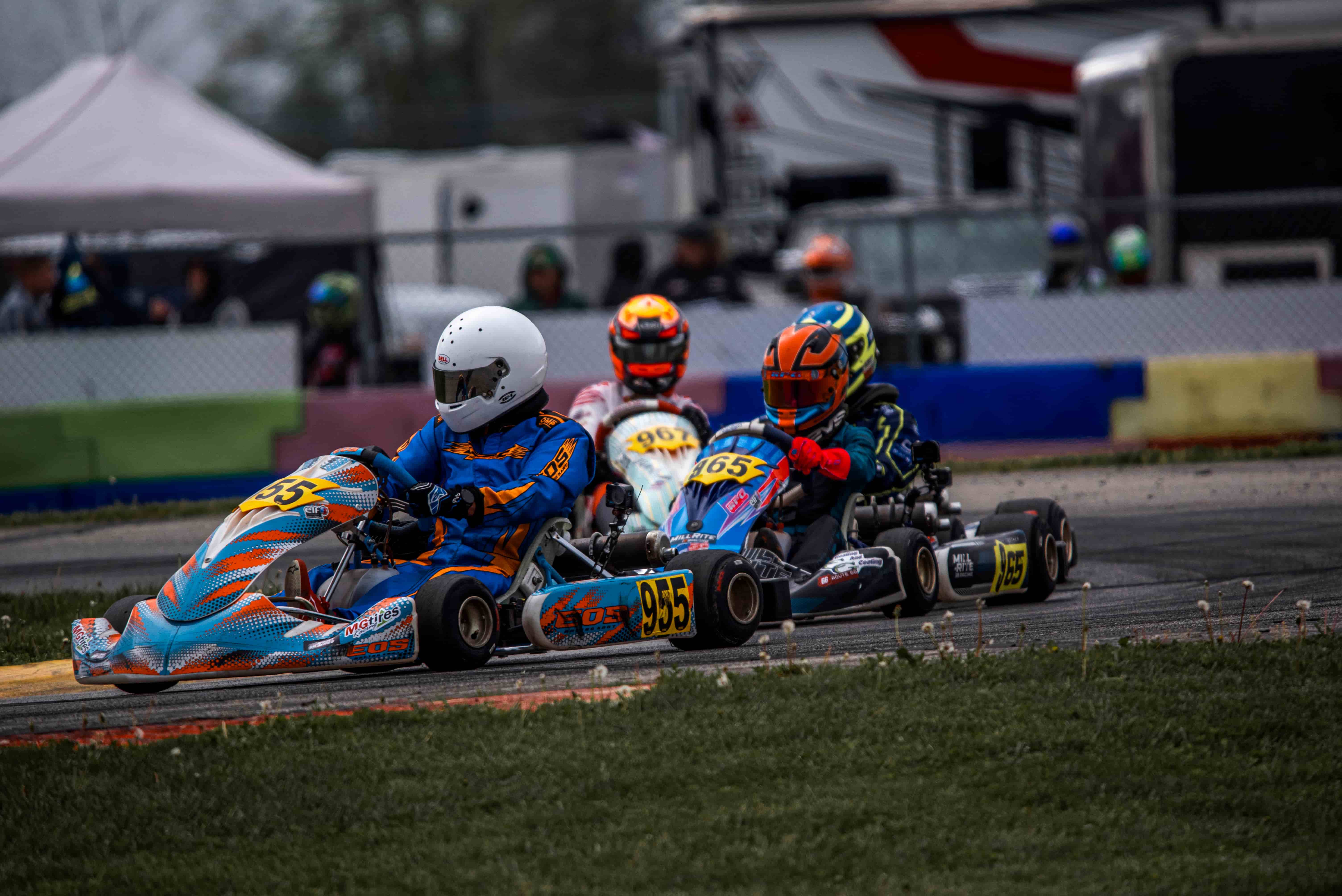
You do not need to be a data engineer to help your young driver improve. Three numbers do most of the work: minimum corner speed (are they carrying speed through the corner), braking points read from the longitudinal G trace (are they braking earlier than the fast kids), and sector deltas (which part of the track is costing them). Look at those three after each session, pick the one corner with the biggest gap, and talk about that corner only. That routine beats an hour of well-meant advice from the fence.
Most karting parents end up in the same spot: you can see your driver is losing time, the kid in the next tent is two tenths quicker, and everyone in the paddock has a different theory about why. A data logger like a MyChron or Alfano ends the theories. This guide is about using it without turning race day into homework, and without needing to master engineering software first.
Why data beats advice from the fence
From trackside you can see maybe two corners well. You cannot see whether your driver braked at the same point both laps, whether they rolled more speed through the hairpin than their rival, or whether the kart was faster before that last setup change. The logger sees all of it, every lap. Just as important, data takes the emotion out of the conversation. “Your minimum speed in turn 3 was 4 km/h down on your best lap” is something a young driver can act on. “You need to try harder in the corners” is not.
The three numbers that matter
- Minimum corner speed. The slowest point in each corner. Comparing it lap to lap, or driver to driver, shows instantly where speed is being given away. Big gaps here are almost always worth more than anything else on the list.
- Braking points. Karts have no brake sensor, but the longitudinal G trace shows exactly where deceleration starts. Braking 10 meters early into the fastest corner on the track is one of the most common and most fixable time leaks. Our guide to finding braking points from telemetry shows what this looks like.
- Sector deltas. The track split into sections, with the time gained or lost in each. This is your triage tool: it tells you which one corner to talk about and which corners to leave alone. More in reading sector deltas.
A simple after-session routine
Keep it to ten minutes, ideally while the session is still fresh but after the helmet is off and the drink is open.
- Export the session and open it while your driver grabs a snack.
- Compare their best lap against their second best. Where do they differ?
- Find the one corner with the biggest loss in the sector deltas.
- Look at that corner only: was it braking too early, or a low minimum speed?
- Agree on one thing to try next session. One. Write it down.
- Next session, check whether that number moved. Celebrate if it did.
That last step matters more than people think. Data gives young drivers proof they are improving even on days the results sheet says otherwise, and that is what keeps them in the sport. The full method is in how to find lap time in a kart with data.
How to talk about the data with your driver
Ask, do not tell. “What happened in turn 5 on that lap?” works better than “you braked too early in turn 5.” Drivers of any age take ownership of problems they diagnosed themselves, and kids especially. Show them the trace, let them spot the gap, and let the data be the coach so you can stay the parent. If they drove a corner well, show them that too; the overlay of their best corner is the most motivating screen in the whole tool.
What to avoid
- The full debrief. Five findings per session is four too many. Nothing sticks past the first one.
- Chasing every channel. RPM, temps, and the exotic channels have their uses, but for driver improvement the three numbers above cover it. Do not let the software make the sport feel like school.
- Comparing against unfair references. Comparing a cadet lap against a national-level driver in different conditions produces discouragement, not lap time. Their own best sectors are the fairest target: a lap built from their best sector in each part of the track is already provably achievable.
- Data on a bad day. After a crash or a rough race, put the laptop away. The session will still be there Tuesday.
You do not have to read the traces yourself
Everything above assumes someone opens the data and finds the story. That someone does not have to be you: Speed Lab reads the session and writes the coaching report itself, naming the corners where time is being lost and what to try next, in plain language. Plenty of parents use the report as the debrief and the traces as the backup. If you want to see what that looks like on a real session first, the live demo walks through one with no account needed.
See it on a real session
The quickest way to make this click is to look at real data. The live demo walks through a full kart session, speed traces, track map, sector deltas, and an AI coaching report, with no account needed.
Kart Track Team
Telemetry analysts at Kart Track
The Kart Track team builds Speed Lab, the telemetry analysis engine behind karttrackapp.com. We spend our days parsing MyChron and Alfano data and building the speed traces, track maps, and AI coaching reports that turn raw laps into specific, corner-by-corner feedback for kart racers.